

Art Therapy
Discover a different way to process trauma, anxiety, burnout, and life's challenges through creative expression.
No artistic experience required.

What is Art Therapy?
Art therapy is an evidence-based mental health profession that combines traditional psychotherapy with the creative process to support healing, self-discovery, and emotional well-being. As Board-Certified Art Therapists (ATR-BC), Chris and Casey use art intentionally as a therapeutic language…not to create beautiful artwork, but to help clients explore thoughts, emotions, experiences, and patterns that may be difficult to express with words alone.
One of the most common misconceptions about art therapy is that you need to be "good at art."
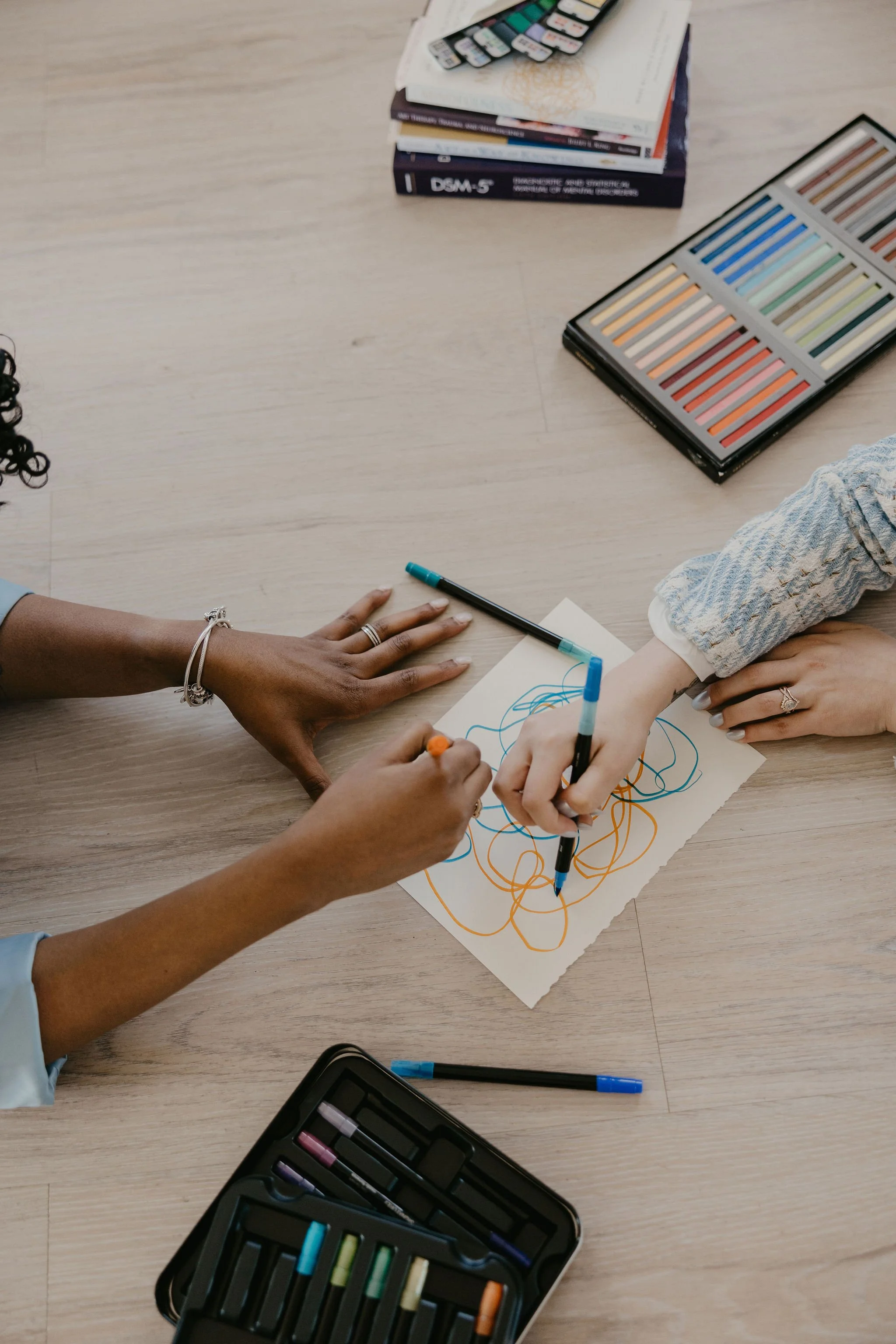
The truth is, artistic ability has little to do with the therapeutic process. Art therapy is about expression, curiosity, and gaining insight…not creating something worthy of hanging on a wall. Stick figures, abstract colors, collage, doodles, or simple shapes can all become meaningful parts of the work we do together.
What does virtual Art Therapy look like?
Many people wonder how art therapy works over telehealth…and the answer is surprisingly well!
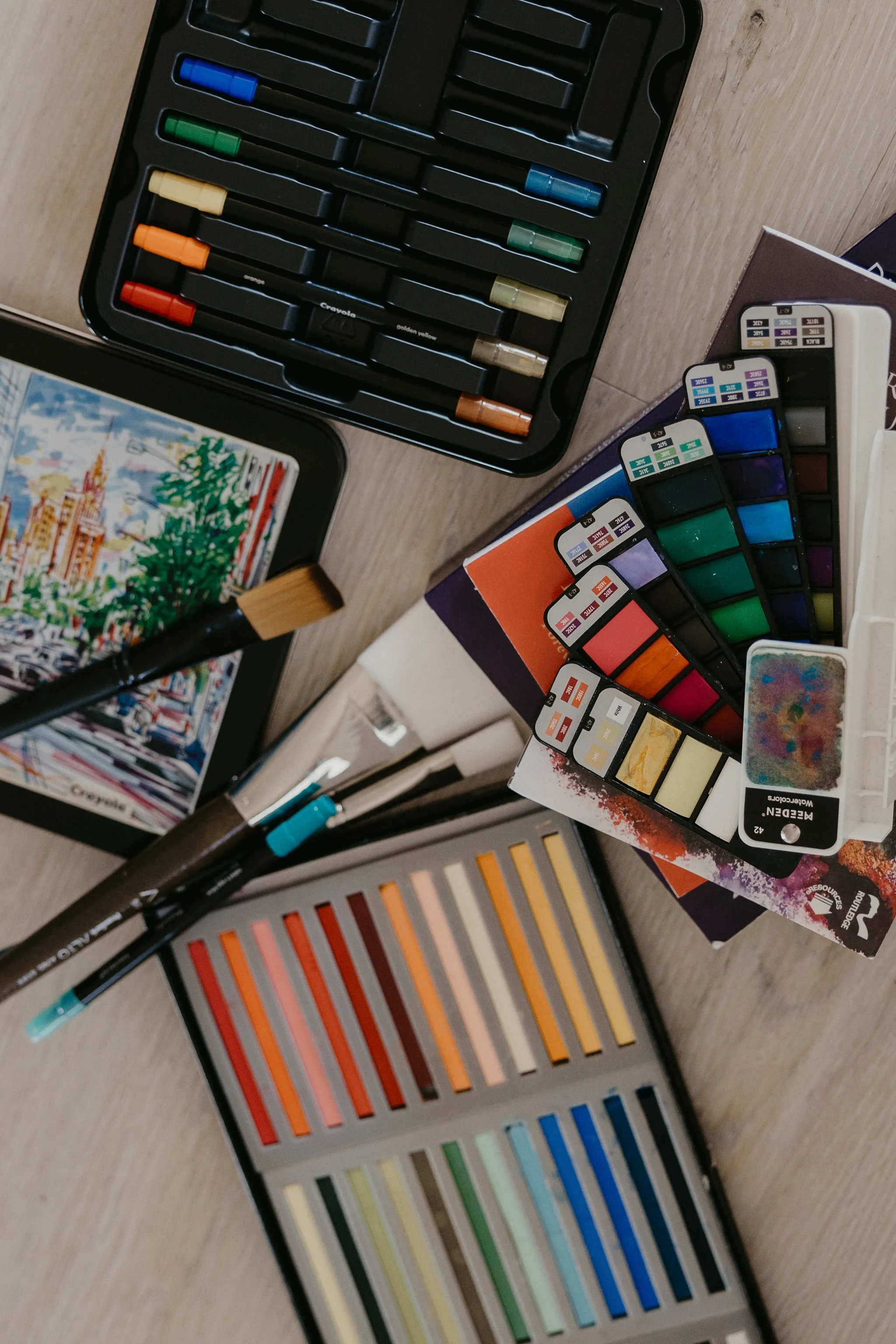
During virtual sessions, you'll use materials that you likely already have at home, such as paper, pencils, colored pencils, markers, or crayons. You may also be interested in using watercolor paints, magazines for collage, modeling clay, or other creative materials that feel comfortable to you. Art making will always be tailored to your comfort level and therapeutic goals.
Throughout the creative process, we'll continue talking just as we would in a traditional therapy session. Sometimes we'll pause to notice thoughts, emotions, or physical sensations that arise while you're creating. Other times, the artwork simply provides another way to reflect on your experiences after it's complete. You may choose to hold your artwork up to the camera, describe it, or simply discuss what the experience was like for you. There is never pressure to interpret your artwork in a particular way or to share more than you feel comfortable sharing.
Virtual art therapy allows you to engage in creative healing from the comfort and privacy of your own space while receiving the same individualized care and clinical support as in-person therapy.
Is Art Therapy or Traditional Counseling Right for me?
There isn't a "right" choice, and in many cases, you don't have to choose. Our approach often integrates traditional talk therapy with art therapy, allowing us to use whichever approach best supports your goals during each session.
Some clients prefer to process experiences through conversation, while others find that creative expression helps them access emotions or perspectives that are difficult to put into words. We'll work together to find an approach that feels comfortable, meaningful, and effective for you.
Why Combine Art Therapy with Talk Therapy?
Talk therapy and art therapy aren't competing approaches, they often complement one another.
While conversation can help organize thoughts, gain insight, and develop practical coping skills, the creative process can access emotions, memories, and experiences that may be difficult to express with words alone.
By integrating both approaches, therapy becomes more flexible and individualized, allowing us to choose the tools that best support your goals in each session.
Frequently Asked Questions About Art Therapy
-
Not at all. In fact, many of my clients tell me they're "not creative" or "can't even draw a stick figure." Art therapy isn't about artistic skill, it's about using creativity as another way to explore your thoughts, emotions, and experiences.
-
Yes. Art therapy is supported by a growing body of research and is used in hospitals, schools, community mental health settings, private practice, rehabilitation programs, and veterans' services. Research suggests that engaging in the creative process can help reduce stress, improve emotional regulation, support trauma recovery, increase self-awareness, and facilitate communication when words are difficult to find.
-
No. Art is always an invitation, never a requirement. Some sessions may focus entirely on conversation, while others may incorporate creative activities when they support your therapeutic goals. Together, we'll decide what feels most helpful for you.
-
Art therapy can be beneficial for individuals experiencing anxiety, trauma, stress, grief, life transitions, emotional overwhelm, burnout, identity exploration, self-esteem concerns, ADHD, and relationship challenges. It can also be a powerful way to develop coping skills, increase mindfulness, and deepen self-understanding.
-
No. Your artwork belongs to you, and there are no universal meanings or "hidden messages" that I'm looking to uncover. Instead, we'll explore what your artwork means to you. My role is to help facilitate reflection, ask thoughtful questions, and connect your creative process to your therapeutic goals, not to assign symbolic interpretations.
-
That's completely normal. Trying something new can feel vulnerable, especially if you haven't made art since childhood. We'll move at a pace that feels comfortable, and you're always in control of how much or how little you choose to engage in creative activities. My goal is to create a space where curiosity feels safer than perfection.
-
Most clients begin with materials they already have at home. A few sheets of paper and a pencil are often enough. If you'd like to expand your creative options, I can provide recommendations for affordable art supplies, but purchasing special materials is never required.