
Grow your skills, gain confidence, and become the therapist you’ve always wanted to be.
Clinical supervision and consultation for counselors and art therapists in Maryland and Pennsylvania
Why Clinical Supervision Matters
Clinical supervision is more than a licensure requirement. It's one of the most influential relationships you'll have as a developing therapist. A supportive supervisor helps you strengthen clinical skills, navigate ethical dilemmas, build confidence, process challenging cases, and discover your own authentic therapeutic voice.
Our goal isn't simply to help you earn hours…
It's to help you become the clinician you aspire to be!

Looking for a supervisor but not sure where to start?
-
Population
Consider the population you are currently working with or would like to work with. This is an important foundational element to receiving proper supervision. It is important to find a clinician who has experience working within that context!
-
Licensure
The clinician providing supervision must be licensed in the state you are currently seeking licensure in as well as approved by that licensing board to provide supervision. Ensure you are familiar with your state’s requirements. Your supervisor additionally puts effort in to stay up to date with requirements and regulations to ensure they are best meeting your needs!
-
Individual or Group
In the state of Maryland you are required to complete no less than 3 years and 3,000 total hours of supervised clinical experience. Up to 1,000 hours can be obtained via masters level practicum. Half of those hours can be group based supervision but a minimum of 50 hours are required to be individual, face to face, supervisory hours. (Maryland Board of Counseling and Therapists, 2025)
Licensure requirements are subject to change. We encourage supervisees to verify current regulations directly with their licensing board.
-
Personality and Approach
No clinical supervisor is created equal, all are unique and bring their unique experiences to the table to support you on your journey to becoming a therapist! Not all supervisors will be a good fit for you and that is okay. Consider your learning style, personality, and what type of person you would learn best from or click with most naturally! Also consider if stepping outside of your comfort zone might be a stepping stone toward growth for you.
-
Clinical Philosophy
Beyond credentials and experience, consider whether your supervisor's therapeutic philosophy aligns with your own professional goals. A supervisor should not only challenge your thinking but also encourage you to develop your own clinical voice rather than simply practicing like they do.
-
Growth Goals
Think about where you want to grow as a clinician. Are you hoping to strengthen your confidence, improve case conceptualization, learn trauma-informed approaches, develop your therapeutic identity, or specialize in a particular population? Finding a supervisor whose experience aligns with your goals can help you make the most of your supervision experience and support your long-term professional development.

“Trusting yourself as a clinician comes first.”
- Casey Frederick MA, LCPC, LCPAT, LPC, ATR-BC
My supervision approach is person-centered and grounded in the belief that confidence and self-trust are at the core of effective clinical work. I aim to create a supportive, collaborative space where you can explore your growth edges, strengthen your clinical judgment, and develop your authentic therapeutic voice. With experience across partial hospitalization, open studio art therapy, and private practice settings, I bring a well-rounded perspective to the complexities of working with adults, particularly those in military, first responder, and helping professions, as well as individuals navigating trauma. Together, we’ll integrate creativity, reflection, and curiosity to help you grow into a clinician who leads with both skill and self-assurance.
Approved Supervisor for Counseling (LGPC) by the Maryland Board of Counselors and Therapists.
Approved Supervisor for provisional art therapists working toward board certification (ATR-P).
*Pursuing Maryland Board Approval for supervision of provisionally licensed art therapists (LGPAT)
Areas of Clinical Interest

“Growth happens when we’re willing to be honest with ourselves and with each other.”
-Christlyn McCaskill MA, LCPC, LCPAT, ATR-BC
My supervision approach is direct, honest, and collaborative, rooted in the belief that meaningful growth comes from reflection paired with real, compassionate feedback. I aim to create a space that balances challenge and support, where you feel both encouraged and held accountable as you develop your clinical skills and professional identity. I believe in calling people in, inviting honest dialogue that fosters insight, confidence, and authenticity in your work. With experience in partial hospitalization, community mental health clinics, and private practice, I bring a practical and grounded perspective to supervision. My work spans teens through adults, focusing on helping clinicians strengthen their ability to connect, attune, and intervene effectively. Together, we’ll explore how to show up as your most genuine and effective self in the therapy space, because supervision isn’t just about learning; it’s about becoming.
Approved Supervisor for Counseling (LGPC) and Art Therapy (LGPAT) by the Maryland Board of Counselors and Therapists.
Approved Supervisor for provisional art therapists working toward board certification (ATR-P)
Areas of Clinical Interest
Exclusive Supervisee Resource Portal
Your supervision doesn't end when the session does.
As a supervisee with Create & Connect Art Therapy and Counseling, you'll receive exclusive access to our private online supervision portal, designed to support your growth between sessions and throughout your licensure journey.
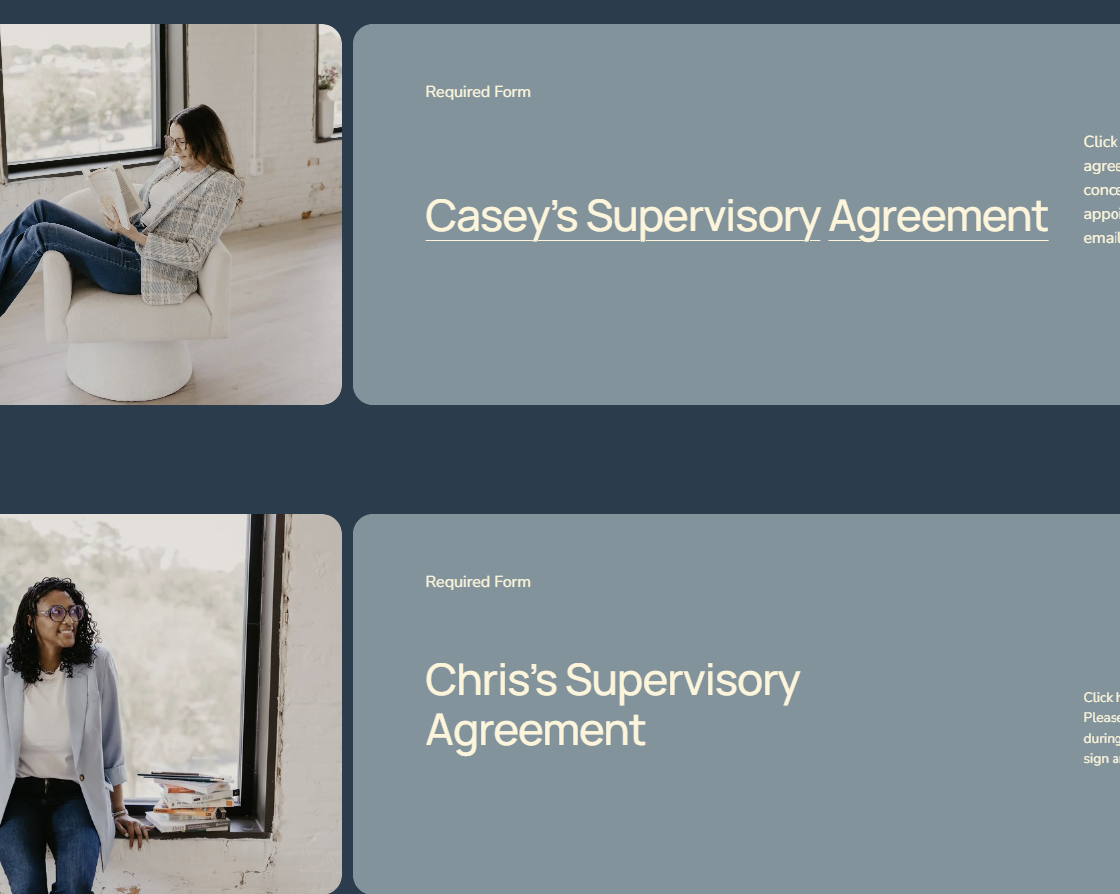
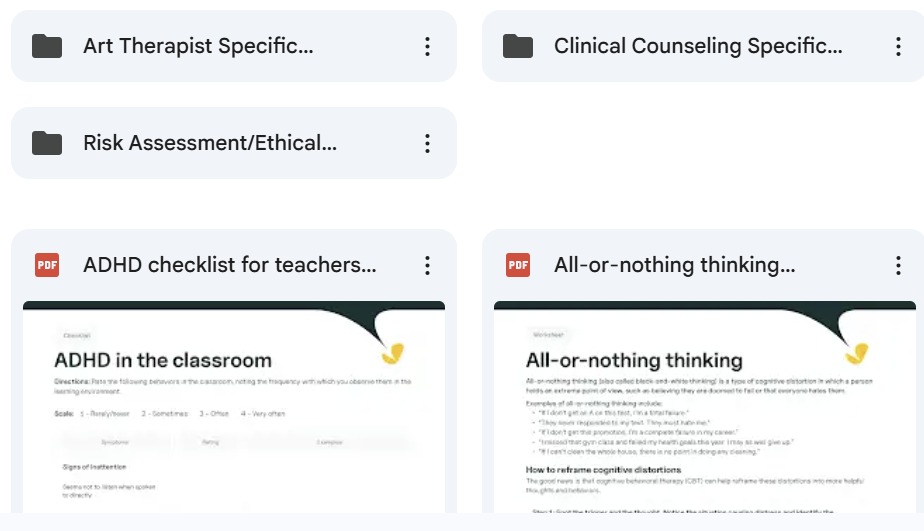
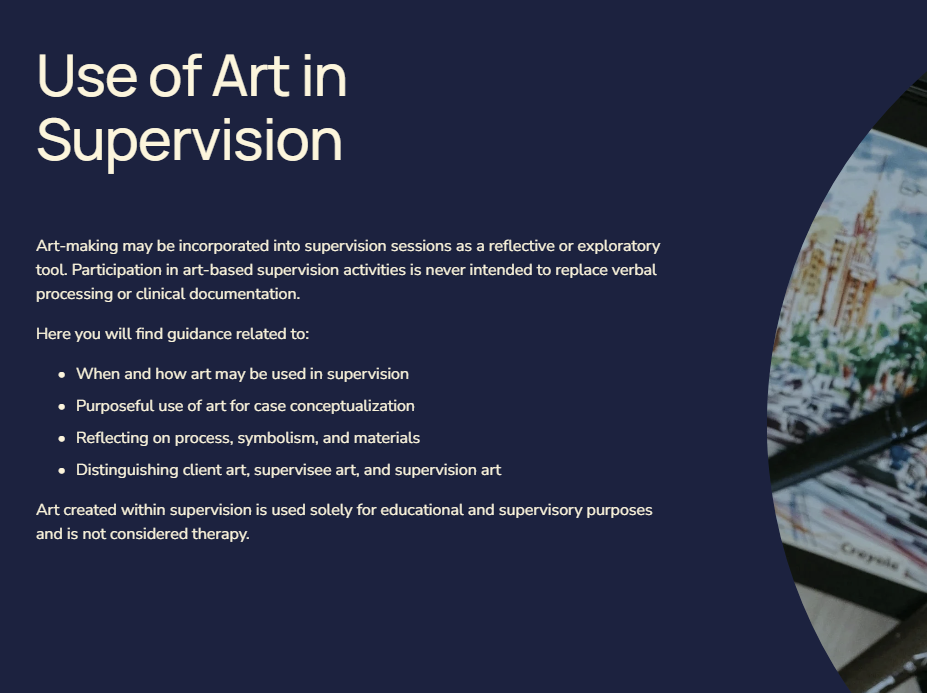
Whether you're looking for licensing information, documentation tools, referral resources, hour-tracking spreadsheets, clinical handouts, or recommended readings, you'll have everything organized in one convenient place whenever you need it.
Our resource library continues to grow with new worksheets, recommended readings, templates, training opportunities, and clinical tools added regularly, giving you ongoing support throughout your supervision experience.
What kind of supervision is right for me?
Group
For those seeking an opportunity to learn from other provisional therapists, network, and collaborate.
*Groups available dependent on interest and scheduling capabilities
Individual
For those seeking one on one supervision in art therapy, counseling, or both.
Consultation
For licensed clinicians seeking opportunity to connect, collaborate, and engage in continuous learning.
Current Group Offering
Looking for a collaborative supervision experience that goes beyond case consultation? Our weekly virtual supervision group is designed for Maryland LGPCs who work with, or hope to work with, first responders, veterans, service members, and other helping professionals.
Together, we'll explore complex cases, strengthen clinical skills, deepen conceptualization, and support one another in doing meaningful, sustainable work.
Group Highlights
Weekly virtual meetings
Small cohort (6 clinicians)
Trauma-informed consultation
Case conceptualization
Skill development
Collaborative learning environment
75$ per session/person

Frequently Asked Questions About Supervision
-
Clinical supervision is a professional relationship in which a qualified supervisor provides guidance, support, feedback, and oversight to help a clinician grow in competence, confidence, and ethical practice. It is an important part of professional development and, for many clinicians, a required step toward licensure.
-
Not at all. While our experience includes trauma, art therapy, military and veteran populations, first responders, and helping professionals, we welcome supervisees working with a wide range of clients and settings. Our focus is on helping you strengthen your clinical skills, develop confidence, and grow your therapeutic identity. If a case falls outside our scope of expertise, we'll help you think critically about appropriate consultation, ethical practice, and additional learning opportunities.
-
Supervision is typically a collaborative conversation that may include case consultation, treatment planning, ethical decision-making, documentation questions, clinical skill development, and discussion of interventions. It is also a space to explore your growth as a clinician, including areas such as confidence, boundaries, countertransference, and professional identity.
-
Clinical supervision is a formal professional relationship that includes oversight, mentorship, and evaluation, and it is often required for licensure. Case consultation is usually a collaborative discussion about clinical work and may occur among peers or licensed professionals. While consultation can be very helpful, it does not replace supervision when supervision is required.
-
Yes. Many supervisors offer virtual supervision, which can provide flexibility and accessibility while still allowing for meaningful discussion and professional support. Virtual supervision can be a convenient option for clinicians who need a consistent and secure way to meet.
-
You are likely getting the most out of supervision when you leave with greater clarity, new insights, and practical next steps. Supervision should help you feel more confident in your work while also encouraging you to think critically and continue developing as a clinician.
-
Common supervision topics include case conceptualization, diagnosis, treatment planning, ethical dilemmas, risk assessment, documentation, therapeutic interventions, and managing complex client presentations. Supervision may also include discussion of self-care, therapist well-being, and the emotional impact of clinical work.
-
A good clinical supervisor is knowledgeable, approachable, ethical, and able to provide both support and constructive feedback. Effective supervision should help you think more deeply about your work, strengthen your skills, and encourage professional growth in a respectful and collaborative environment.
-
A good fit often depends on your learning style, professional goals, and the kind of support you need. Some clinicians prefer a more structured approach, while others value collaboration and open discussion. It can be helpful to ask about a supervisor’s style, areas of expertise, and expectations so you can determine whether their approach aligns with your needs.
-
The frequency of supervision depends on licensure requirements, professional needs, and the structure of the supervisory relationship. Many clinicians meet weekly, though the schedule may vary based on state regulations, hours needed, and the supervisor’s availability.
-
It is helpful to come prepared with case notes, questions, concerns, or topics you would like to discuss. You may want to bring client presentations, ethical questions, treatment planning challenges, or anything else that would benefit from thoughtful reflection and feedback.