You Can Handle the Crisis. But Carrying It Home Is Different.
Trauma-informed therapy and art therapy for firefighters, law enforcement officers, EMTs, paramedics, dispatchers, and other first responders throughout Maryland and Pennsylvania.
The Same Strengths That Help You Serve Can Become Heavy to Carry
You know how to stay calm when things are unpredictable. You know how to make decisions under pressure, support others through difficult moments, and keep moving forward when others are overwhelmed.
Those skills are part of what make you effective at your job.
But the ability to handle a crisis does not always mean your mind and body know how to leave the crisis behind.
Many first responders find that they can manage the most difficult moments on the job, yet struggle with the quieter moments afterward—the relationships, emotions, and experiences that follow them home.
Understanding the Weight First Responders Carry
First responder work requires a unique combination of responsibility, resilience, and emotional control.
Seeking therapy can feel unfamiliar when you have spent years being the person others depend on.
Many first responders worry they will be misunderstood or asked to explain experiences that others cannot fully understand.
At Create & Connect, we recognize the culture of service, responsibility, and resilience that shapes first responder communities.
We support:
Firefighters
Law enforcement officers
EMTs and paramedics
Dispatchers
Corrections officers
Search and rescue professionals
Federal officers
Other public safety professionals
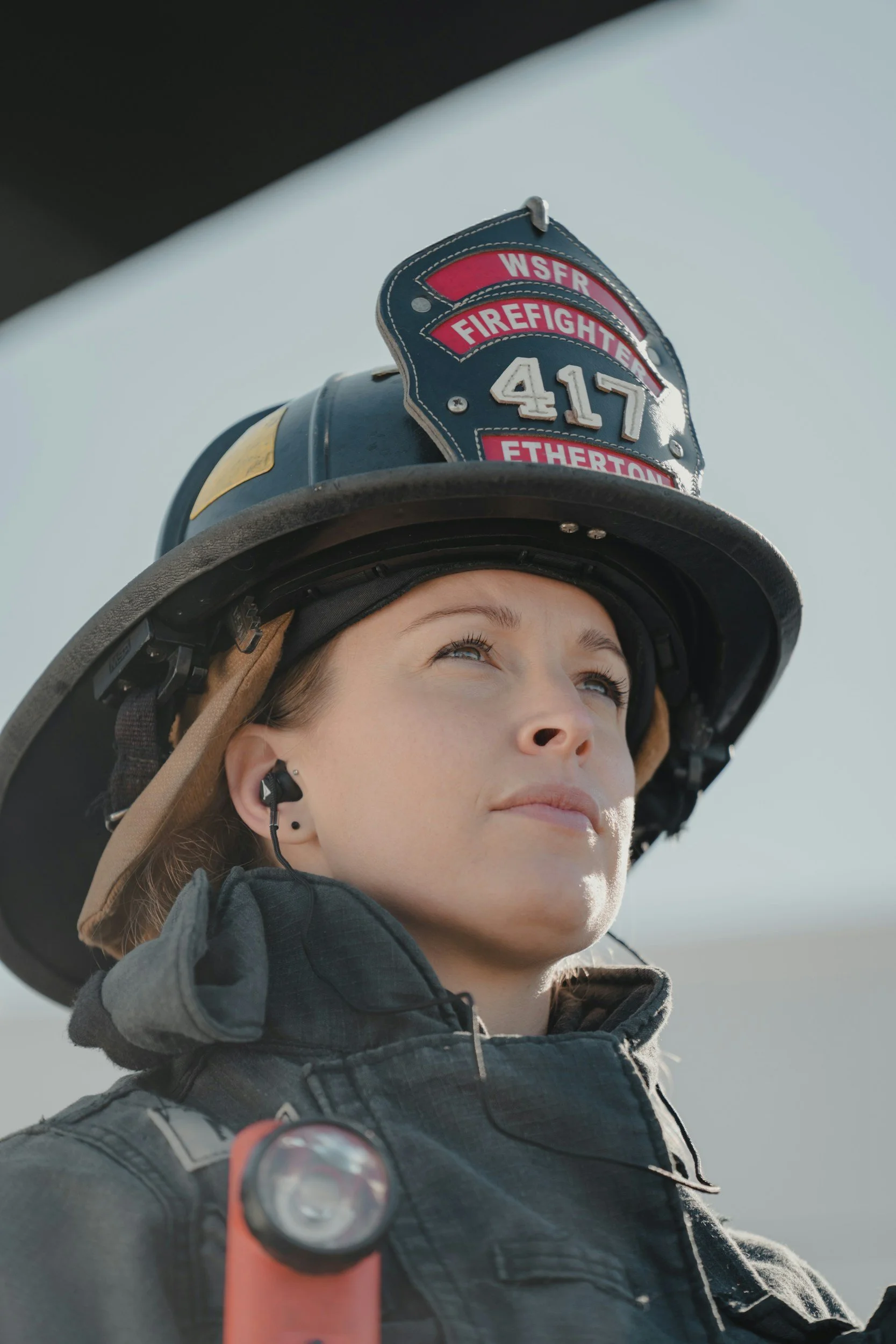

Casey brings more than 5 years of direct, specialized, experience supporting first responders and their families, providing a confidential space where you can process your experiences without minimizing, justifying, or explaining why they matter.
Common Reasons First Responders Seek Therapy
First responders often come to therapy when they notice that the strategies that helped them function at work are no longer feeling sustainable at home.
You may be seeking support for:
Trauma & Critical Incident Stress
Processing experiences, memories, or events that continue to impact your emotional well-being.
Burnout & Emotional Exhaustion
Feeling depleted, disconnected, or like you are running on empty after years of giving so much to others.
Hypervigilance & Difficulty Relaxing
Feeling "on guard," struggling to turn your mind off, or finding it difficult to feel fully present.
Relationships & Communication
Learning how to express emotions, reconnect with loved ones, and create healthier patterns outside of work.
Sleep Difficulties
Managing racing thoughts, stress responses, nightmares, or difficulty settling after demanding shifts.
Identity Transitions
Navigating changes related to career shifts, retirement, injury, role changes, or life outside of the first responder identity.
Moral Injury & Difficult Experiences
Exploring the impact of situations that challenged your values, beliefs, or sense of what is right.
Beyond the Call: Exploring Your Experience Through Creativity
First responders spend their careers creating safety and stability for others.
Art therapy creates a different kind of space, one where you can slow down, reflect, and explore your own experiences with curiosity and compassion.
The creative process can support emotional processing, self-awareness, stress regulation, and healing by offering another way to connect with thoughts, emotions, memories, and experiences.
For many first responders, the challenge isn’t not knowing what happened. The challenge can be understanding how those experiences continue to affect you.
Art therapy allows us to explore those connections in a way that feels personal, flexible, and individualized.
No artistic ability is required. Art therapy is not about creating something perfect, it is about using creativity as a tool for reflection, expression, and growth.
Our Approach
At Create & Connect, therapy is personalized to your experiences and goals.
Depending on what you need, sessions may incorporate:
-
Understanding how your experiences have shaped your thoughts, emotions, behaviors, and relationships.
-
Casey helps by exploring the different parts of yourself that developed to protect you, the part that stays in control, the part that pushes through, the part that feels responsible for everyone else, and the part that may be exhausted from carrying so much.
-
Using creativity as another pathway for self-expression, processing, and healing.

Together, we create space for you to understand what you have carried and reconnect with yourself beyond the role you serve.
-
Yes. Your privacy is one of our highest priorities. Therapy is confidential, and your personal information is protected by law, with only a few specific exceptions related to safety or legal requirements. We understand that many helping professionals worry about how seeking therapy could affect their career. During your consultation, we're happy to answer any questions about confidentiality so you can make an informed decision.
-
Absolutely. Burnout and compassion fatigue can affect anyone in a caregiving or service-oriented role. Therapy provides a space to process chronic stress, establish healthier boundaries, reconnect with your values, and develop strategies that support both your personal well-being and professional resilience.
-
Moral injury occurs when someone experiences, witnesses, or feels unable to prevent situations that conflict with their deeply held values or beliefs. It can lead to feelings of guilt, shame, anger, or disillusionment. Therapy offers a supportive, nonjudgmental space to process these experiences, make meaning of them, and move toward healing.
Frequently Asked Questions
-
Yes. Virtual therapy is a flexible, evidence-based option that allows you to receive support from the privacy and comfort of your own space. Many clients appreciate avoiding travel time and having access to specialized care that fits around demanding or unpredictable schedules.
-
Not at all. Art therapy is always optional and tailored to your comfort level. Some clients enjoy integrating creative expression regularly, while others prefer traditional talk therapy or a combination of both. Together, we'll determine the approach that best supports your goals.
-
Many people in service-oriented professions are trained to prioritize others, stay composed under pressure, and push through difficult situations. Over time, this can make it challenging to recognize your own needs or feel comfortable accepting support. Seeking therapy isn't a sign of weakness, it's an investment in your well-being that allows you to continue showing up for yourself and the people who depend on you.
You Don’t Have to Carry it Alone
You've spent your career showing up for others. Now it's okay to invest in yourself.
Whether you're navigating burnout, trauma, life transitions, or simply looking for a space where you don't have to censor your story, we're here to help.
Schedule a complimentary 15-minute consultation to learn more about our approach, ask questions, and see whether we're the right fit for your journey.